EPF Withdrawal: Changing jobs is common these days. In pursuit of a better salary, a better profile, and new learning, we often move from one company to another.
At such times, when the EPF balance from your previous job appears in front of you, it’s natural to think about withdrawing it.
Sometimes you think about buying a new mobile phone, sometimes you plan a trip. At that time, this amount seems small and easy, but this very decision can have a huge impact on your retirement.
In reality, EPF is not just a savings account; it is the strongest foundation for your old age. It is important to understand this; a hasty decision early in your career can result in a loss of lakhs in the future.
What is EPF and its true purpose?
The Employees’ Provident Fund (EPF) was created by the government for retirement. A portion of your salary is deducted every month, and the company contributes an equal amount. This entire system is managed by the Employees’ Provident Fund Organisation.
The biggest strength of EPF is its compounding system. Currently, it earns an annual interest rate of around 8.25 per cent. This interest is added to your deposit every year, and then interest is paid on the same increased amount the following year. This is why even a small amount can become significant if EPF is left for a long period.
Why does withdrawing PF seem easy when changing jobs?
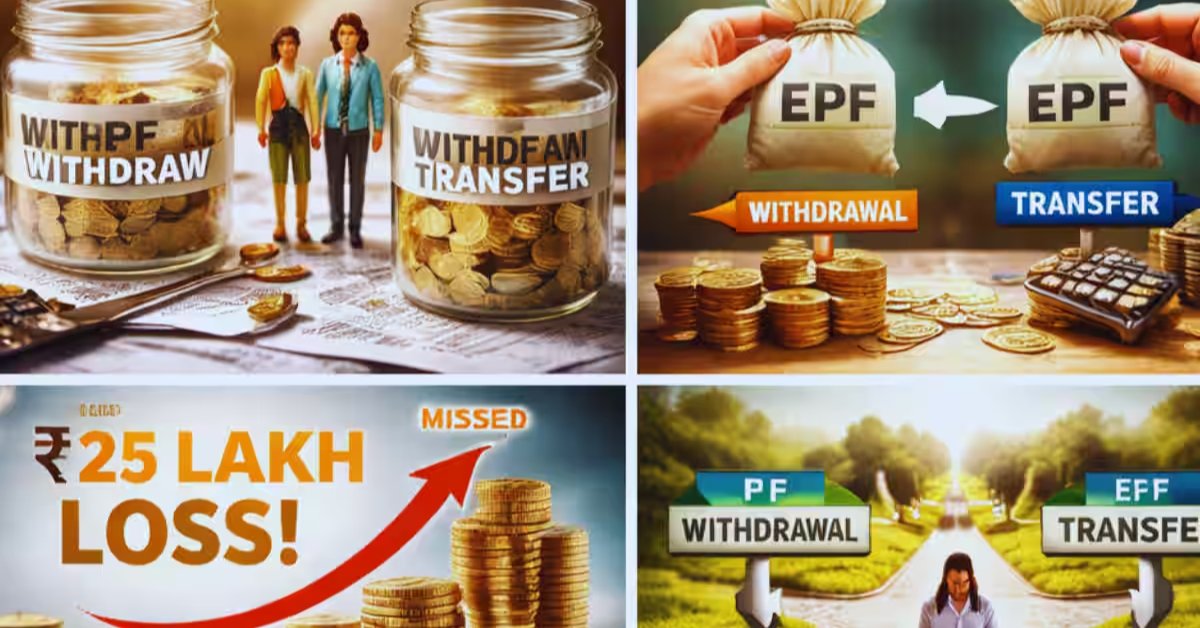
When an employee changes jobs, they have two options: first, withdrawing their PF funds, and second, transferring it to the new company’s PF account. Most people are attracted to the first option.
Let’s say you have ₹50,000 or ₹1 lakh deposited in your PF account. This amount can be immediately available, so the mind thinks of withdrawing it to meet a need. But this is where we compromise on our future.
The Mathematics of Compounding That Makes a Difference
Now, let’s understand compounding in simple terms. Suppose you withdrew just ₹1 lakh from your PF account at the beginning of your career. If this money had remained in EPF and earned an average interest of 8.25 per cent, it could have grown to around ₹10,000-₹12,000,000 in 30 years.
If you make this mistake two or three times and withdraw your PF each time, the loss could be ₹20,000-₹25,000, or even more, by retirement. This isn’t just an estimate, but the simple mathematics of compounding.
This is why the longer you invest in EPF, the greater the benefits. Investing in the early years of your career shows the greatest impact.
What are the disadvantages of EPF withdrawal?
Withdrawals disrupt the compounding process. Your deposit ceases to earn further interest. Furthermore, if you’ve been employed for less than five years, PF withdrawals may be taxable.
This means that the money you’ve saved for your future is not only reduced but also subject to tax. This loss is not felt at the time, but its drawback becomes clearly visible at the time of retirement.
Why EPF Transfer is a Wise Decision
PF transfer means that you link your PF account from your old company to your new company’s account. This ensures your entire money is safe, and the benefits of compounding continue uninterrupted.
These days, the PF transfer process has become much easier. Thanks to your UAN number, this process is done online, eliminating the need for frequent visits to offices. Most importantly, your retirement fund continues to grow.
Why Consider EPF as Wealth Management
In 2026, EPFO should be viewed not just as a government scheme but as a wealth management tool. EPF provides stable and secure returns, independent of market fluctuations.
When the stock market falls or other investment schemes are at risk, EPF provides stability. This is why financial experts advise never to take PF lightly.
Right Decision Today, a Peaceful Tomorrow
If you don’t need a significant amount of money when changing jobs, it’s best to avoid withdrawing PF. A little planning and patience can bring you significant benefits in the future.
While ₹50,000 or ₹1 lakh may seem like a significant amount today, that same amount could make your retirement comfortable tomorrow.
Disclaimer: This article is for general information purposes only. EPF rules, interest rates, and tax provisions may change from time to time. Before making any financial decisions, please consult the official EPFO notification or a qualified financial advisor.
Also Read:
Budget 2026: Yogi Govt Announces Free Scooties For Girls